
- PUBLISHED
How Hard Is It to Climb Lobuche Peak?

Climbing Lobuche Peak is a goal for many trekkers all over the globe. At 6,119 meters, it stands tall in the Khumbu valley alongside Everest and Ama Dablam. But how hard is it really? Some climbers say it is a “walk-up”. Others say summit morning was the toughest day of their lives. The truth falls somewhere in between but closer to the latter. Lobuche Peak is regularly listed among Nepal’s best peak climbing, and for good reason.
This guide breaks down exactly how hard Lobuche Peak climbing actually is. You will learn how altitude affects your body, which sections are technically tricky, and what fitness level you really need. You will also understand the summit ridge, the headwall, and why acclimatization decides who makes it. By the end, you will know if Lobuche East is right for you and what it takes to stand on top.
What Makes Lobuche Peak Hard?
Altitude, technical terrain, physical demands, and weather all stack against you. Here is what actually makes this climb difficult.
Altitude and Acclimatization
At 6,119m, oxygen is roughly half of sea level. Your brain slows. Your lungs burns, sleep becomes elusive. Most climbers feel the effects above 5,000m headaches, nausea, exhaustion after fifty steps. Proper acclimatization is not optional it is the difference between summiting and turning back. The standard itinerary builds rest days at Namche, Dingboche, and Lobuche Village. Rush them and Lobuche Peak climbing becomes a rescue mission.
Technical Difficulty
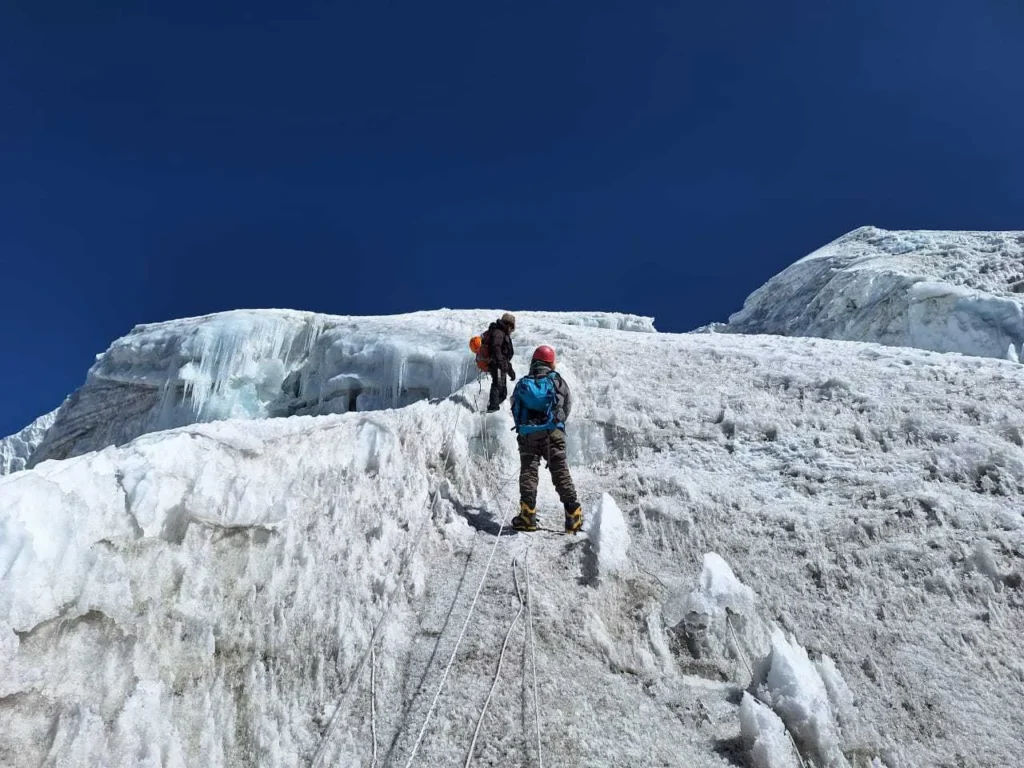
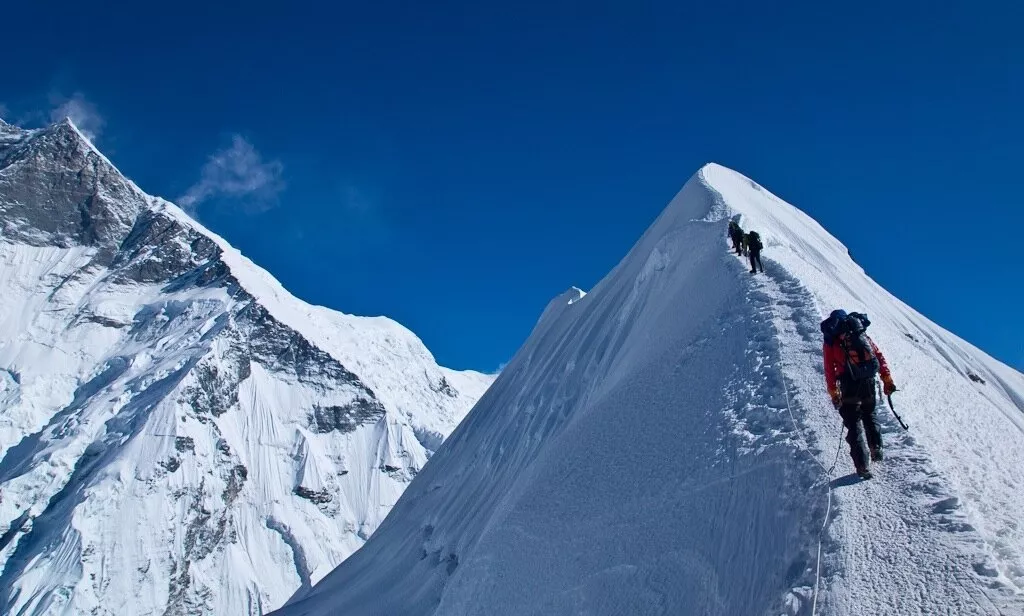
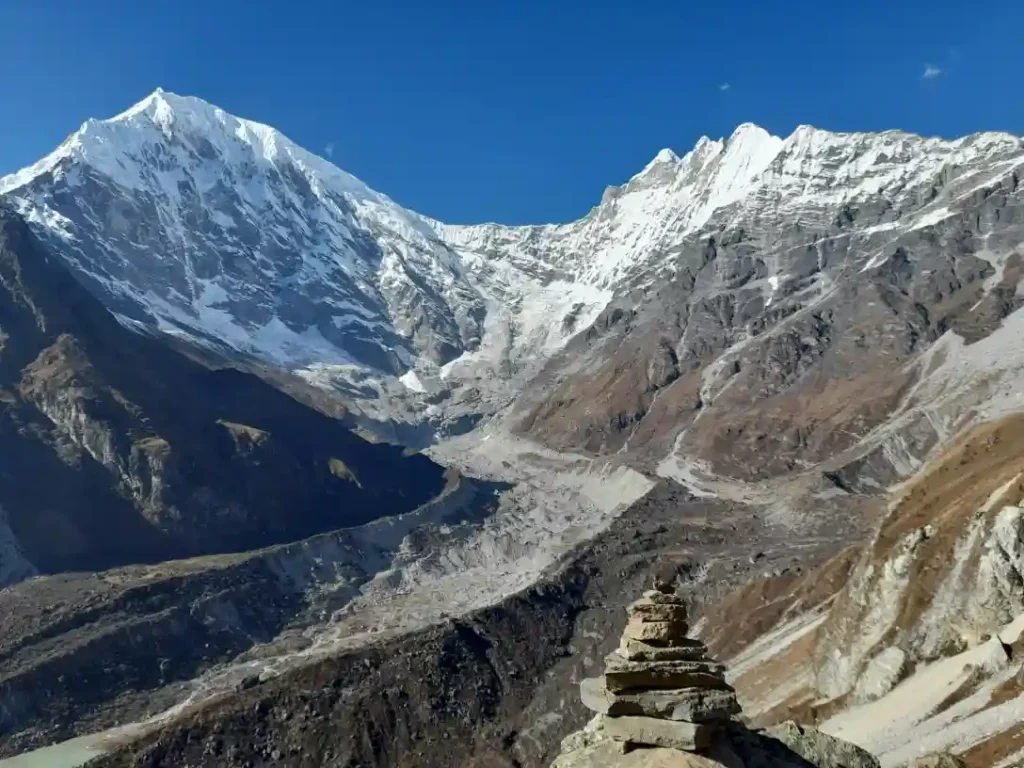
The summit ridge is steep, exposed, and requires solid crampon technique. This is where Lobuche East separates itself from easier peaks. The final headwall rises at 45 degrees hard ice, fixed lines. One climber put it bluntly: “You have to make zero mistakes at 6,000m when you can barely think.” You arrive at Base Camp already competent with crampons, ice axes, and fixed lines or you do not summit. Solid mountain preparation is non-negotiable.
Physical Fitness Requirements
You need excellent cardiovascular endurance and leg strength. The approach trek alone involves eight consecutive days of walking before you reach Lobuche Base Camp. If you cannot carry 15kg uphill for 6–8 hours, you are not ready. Summit day runs 8–12 hours of sustained effort. No chairlift. No rest house. Only forward.
Glacier Travel and Crevasses
The climb navigates the Lobuche Glacier. This is not static terrain. Roped travel and crevasse awareness are essential. Hidden crevasses exist. Snow bridges collapse. Roped teams travel together for a reason.
Weather and Summit Window
Summit day is 8–12 hours in brutal cold. Wind chill at the top can drop to -30°C. The summit window is narrow. Spring offers stable weather but colder temperatures. Autumn brings clearer skies but shorter days. Understanding Nepal’s trekking seasons helps align your expedition.
Common Challenges Climbers Face on Lobuche
Even well-prepared climbers hit obstacles on Lobuche Peak. Here are the ones that turn people around.
- Summit ridge exposure: Narrow ridge with big drops on both sides. Not for those afraid of heights. Every year, climbers reach this point, look down, and decide the summit can wait. The exposure at 6,000m is real and filters out many.
- Altitude headaches and poor sleep: Hits almost everyone above 5,000m. Your head pounds. You stare at the tent ceiling all night. Some nights you do not sleep at all. Then you climb anyway. It wears you down fast.
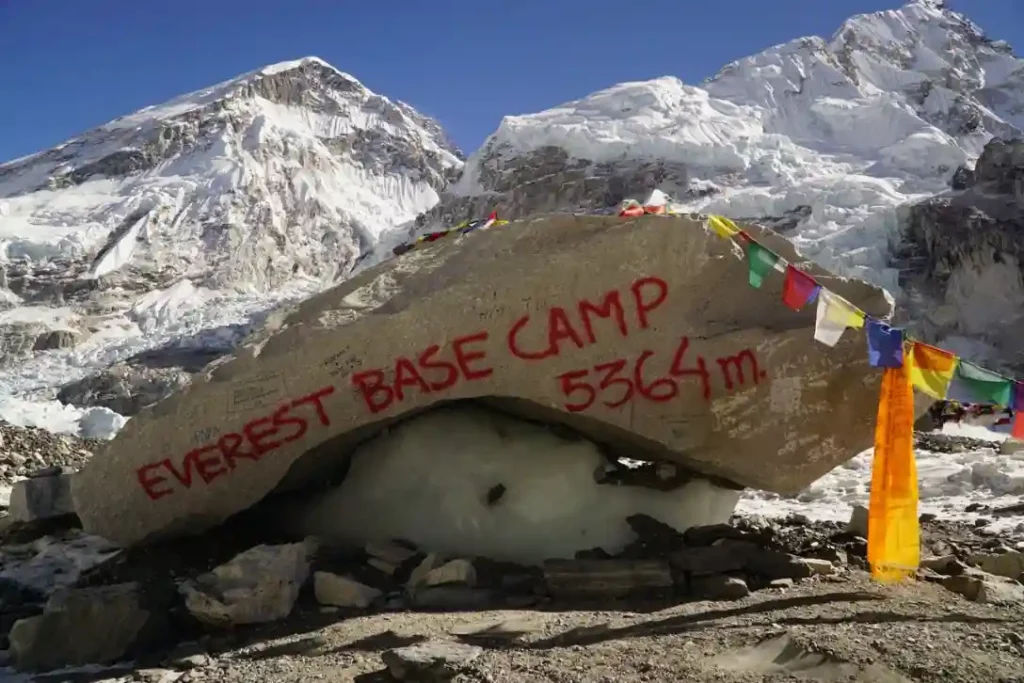
- Fatigue from the approach trek: You reach Lobuche Base Camp already tired. You have walked from Lukla, climbed Namche hill, slept at 4,400m. Two weeks of trekking before the climb starts. The route follows the same valley as Everest Base Camp and demands respect.
- Cold on summit morning: -30°C wind chill is no joke. Your toes vanish. Your fingers barely grip the ice axe. You move because stopping means getting colder. This is why layering matters.
- Acclimatization delays: Weather does not follow your plan. Neither does your body. Storms roll in. Headaches linger. Extra rest days eat your contingency. Some climbers run out of time. The mountain decides, not you.
Training Requirements for Lobuche Peak
You cannot show up unprepared for Lobuche Peak. Your training needs to start months before your flight to Kathmandu. Here is exactly what to focus on.
Cardio and Stamina
You need to run, cycle, or hike for 45 to 90 minutes at least four to five times per week. Zone 2 training builds your aerobic engine, which is what keeps you moving when oxygen gets thin above 5,000m. You also need one long weekend effort of three to five hours to teach your body to keep going when every instinct tells you to stop. Real hills are far better than gym machines. If you live somewhere flat, find the tallest building in your area and climb stairs with a weighted pack until your legs remember the burn.
Strength Training
Squats, lunges, step-ups, and core work all play an important role. But the gold standard for Lobuche Peak climbing is heavy pack carries on stairs. Start with 10kg and gradually work up to 20kg. You need to do this repeatedly. You need to do it when you are tired. You need to do it when you would rather be on the couch. Lobuche Peak rewards the legs that trained when nobody was watching. A solid packing strategy ensures every kilogram you carry earns its place on your back.
Technical Practice
Crampon techniques, self-arrest, rope work, and fixed line ascending are all non-negotiable skills. Do not learn these at Base Camp. Take a dedicated course months before your expedition. Practice until muscle memory kicks in and your hands move on their own. At 6,000m, your thinking will be dangerously slow. Your body needs to know exactly what to do without asking your brain for permission.

Success Tips for Lobuche East
Small decisions make the difference between summit photos and early turnarounds. Here is what successful climbers do right.
- Acclimatize properly: Do not rush the itinerary. Rest days are not optional. “Climb high, sleep low” saves lives. Trust your guide’s pace, Your body cannot rush biology.
- Hire an experienced guide: Local knowledge matters. A certified guide reads the mountain, the weather, and you. They know when to push and when to turn. You are paying for their judgment.
- Train specifically: Stairs with weight. Hill repeats. Back-to-back long days. Lobuche Peak does not care about your bench press. It cares about moving uphill for ten hours.
- Pack warm: Summit morning is brutally cold. If you are comfortable at sea level, you are underdressed for 6,000m. Add one more layer. Add mittens over your gloves.
- Listen to your body: Headache that will not quit? Nausea? Dizziness? Turn back. The mountain will be there next year. You need to be there too.
Is Lobuche Peak Right for You?
Not everyone belongs on Lobuche East. Here is how to know if you are ready.
Climb Lobuche East if:
- You have already climbed a 6000m peak like Island Peak.
- You are comfortable on steep, exposed terrain without freezing up.
- Your fitness is excellent, not just average or pretty good.
- You want a real mountaineering challenge, not a high-altitude walk.
Skip Lobuche East if:
- This is your first time climbing in the Himalaya.
- You feel nervous about heights and exposure on narrow ridges.
- You have not trained consistently in the months leading up.
- You are looking for a “walk-up” summit with minimal technical difficulty.
Conclusion
So, how hard is it to climb Lobuche Peak? Hard enough that it filters out the unprepared. Altitude, technical terrain, and cold all demand respect. But with proper training, prior experience, and the right guide, Lobuche East is absolutely achievable, rewarding you with one of the finest summit ridges in the Khumbu and views from Everest to Makalu.
From trekking peaks to high-altitude expeditions, BeThere is your trusted partner for Lobuche Peak climbing. We combine safety, expertise, and cultural insight into every journey. Let us help you plan your next Himalayan adventure. The mountain is waiting.
Table of Content
Frequently Asked Questions
1. How hard is it to climb Lobuche?
Lobuche East is classified as a Group B trekking peak, meaning it is technically moderate but still demanding . The summit day requires 8–10 hours of climbing on steep 40–45 degree icy slopes with fixed ropes . Climbers need solid crampon and rope skills. It is significantly harder than Island Peak .
2. Can a beginner climb Lobuche?
Not recommended. Lobuche East requires prior 6000m experience and basic mountaineering skills . Most operators require previous trekking peak experience . This is not a peak to learn on. Start with Island Peak or Mera Peak first.
3. How long does it take to climb Lobuche?
The full expedition takes 17–20 days from Kathmandu . This includes the trek in, acclimatization, and summit push. The actual climb from Base Camp to summit and back takes 3–4 days, with summit day alone lasting 8–10 hours .
4. What is the success rate of Lobuche Peak?
Success rate for Lobuche East is 40–50% . This is lower than Island Peak (60–70%) and Mera Peak (75–85%) due to the technical difficulty and exposed summit ridge. Weather and acclimatization are the main reasons climbers turn back.
5. How much does it cost to climb Lobuche?
Lobuche Peak climbing cost ranges from USD $2500 / person to USD $2990 / person depending on group size and services . Permit fees are approximately $125 during peak seasons and $70 in winter/monsoon . This does not include international flights, insurance, or personal gear.
6. Which is harder, Lobuche or Island Peak?
Lobuche is significantly harder than Island Peak . Island Peak has a straightforward headwall, while Lobuche features a narrow, exposed summit ridge and more technical ice sections. Lobuche requires stronger crampon technique and better comfort with exposure at 6,000m .
Need help choosing a trail?
Connect with a local and plan your perfect trek.