~2–3 hours
Estimated Time
(Two-Way)
Shivapuri Nagarjun National Park HQ
Starting Point
~6km
Two way distance
1665-1991m
Elevation Gain
Moderate
Difficulty
Oct- Dec &
Mar-May
Best Seasons
~2–3 hours
Estimated Time
(Two-Way)
Shivapuri Nagarjun
National Park HQ
Starting Point
~6km
Two way distance
1665-1991m
Elevation Gain
Moderate
Difficulty
Oct- Dec &
Mar-May
Best Seasons
Trip Highlights
- Panoramic Views: Kathmandu Valley, Langtang range, and Ganesh Himal on clear days.
- Seasonal Beauty: Rhododendrons (spring), misty trails (monsoon), crisp skies (winter).
- Cultural Encounters: Active nunnery, prayer flags, and Buddhist rituals.
- Trail Diversity: Forested slopes, rocky steps, and quiet meadows.
Trip Overview
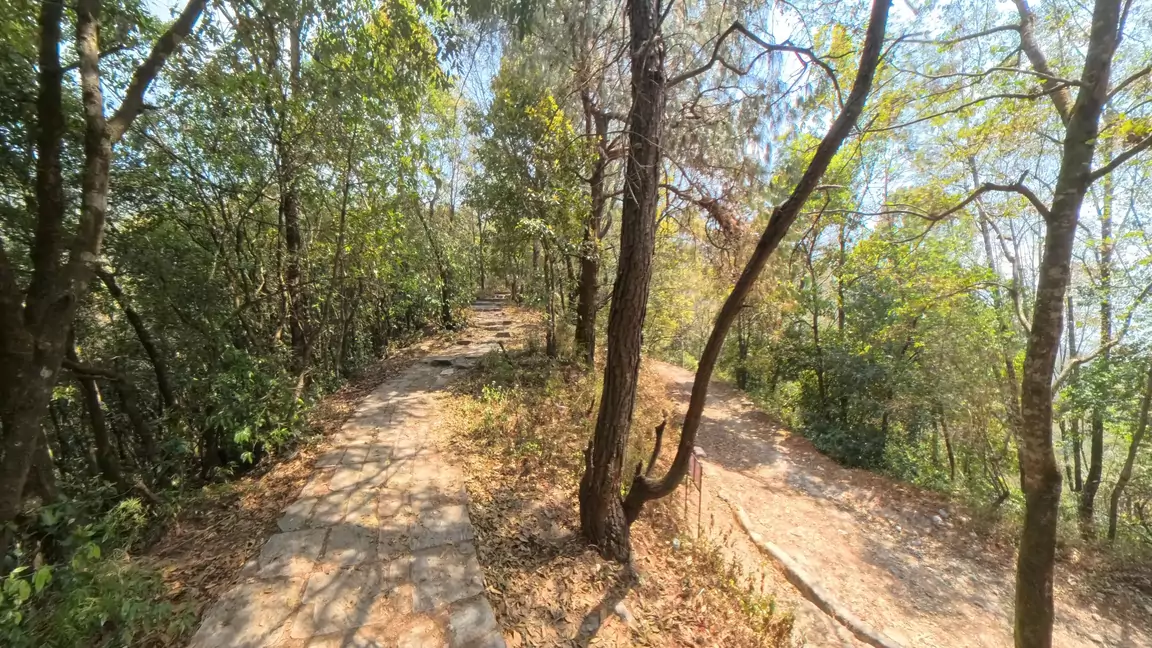
The hike to Nagi Gumba (1991m) begins at the Shivapuri Nagarjun National Park HQ, just above Budhanilkantha temple. This hike to Shivapuri Hill is a great way to escape the noise of Kathmandu and breathe in the cool, clean air. As you ascend through dense forests of pine and rhododendron, the air fills with birdsong and the occasional chatter of monkeys. The trail is marked by fluttering prayer flags and colourful wildflowers. You’ll get glimpses of the valley through the trees as you move up the path.
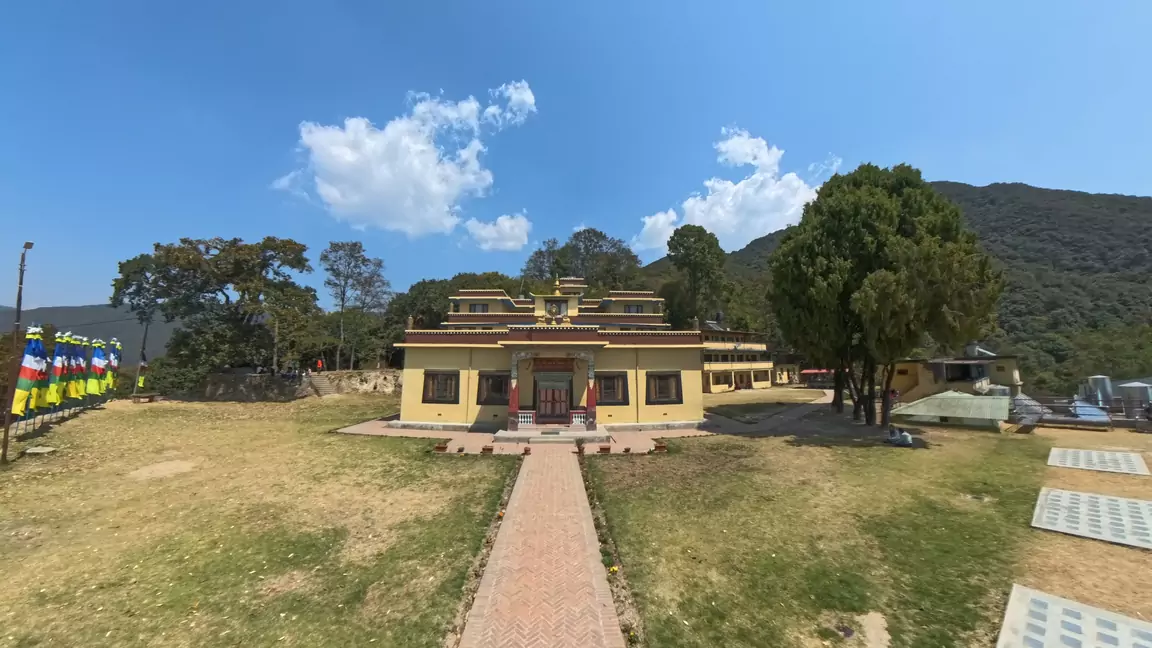
At the end of the hike, you reach Nagi Gumba, a Buddhist monastery that offers a quiet space for reflection and meditation. Situated at an elevation of around 1,991 meters, Nagi gumba is known for its Tibetan Buddhist practices and is home to a community of monks and nuns. The gumba was established in the early 1990s and is dedicated to the practice of Buddhist meditation. It has since become an important spiritual retreat for those seeking peace and solitude. Nagi gumba provides a perfect blend of nature, culture, and spirituality, making it a popular spot for both hikers and spiritual seekers.
Short Itinerary & Routes
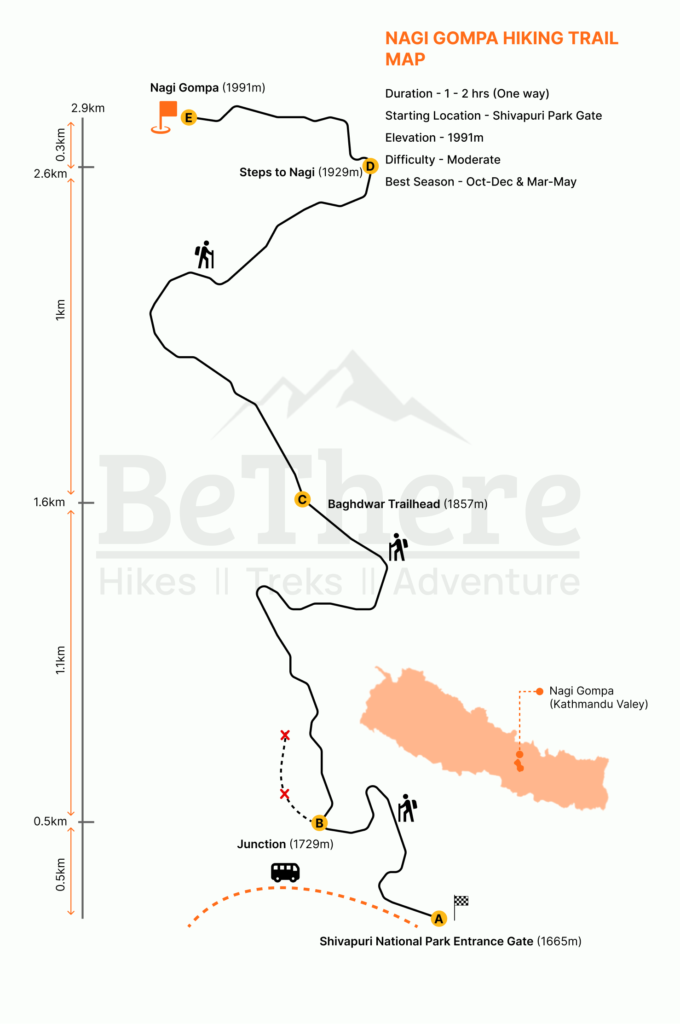
- Start: Begin your walk from the Shivapuri Nagarjun National Park HQ. The air is cool, and the trail is peaceful.
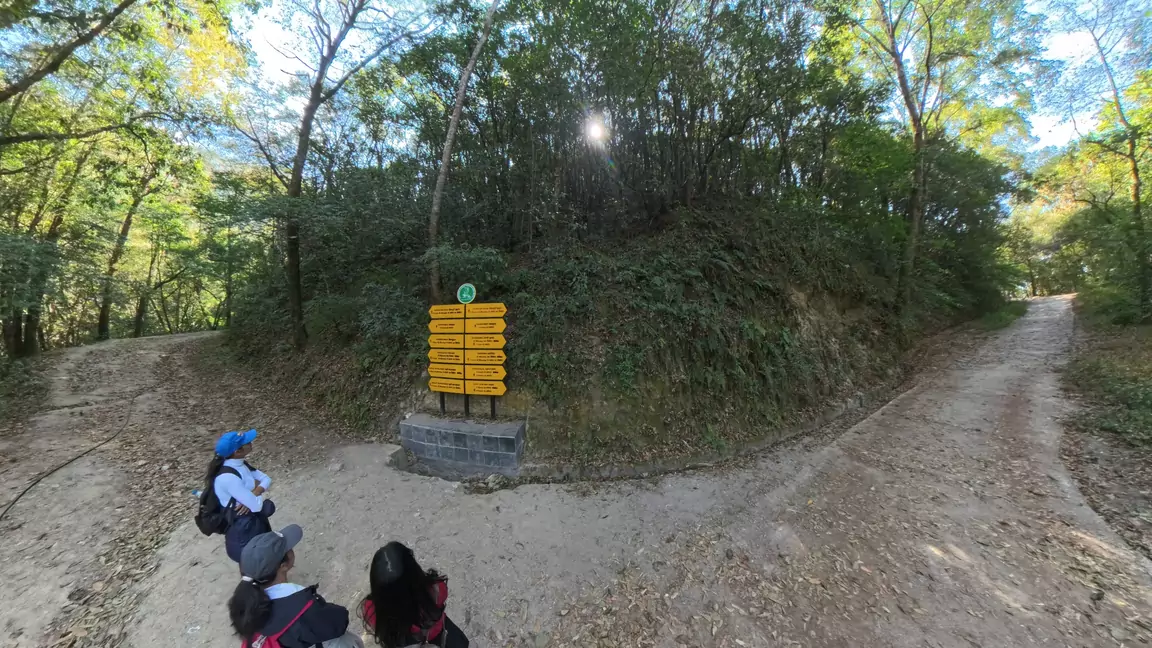
- Junction: After 10 minutes, you’ll reach a junction. the right trail to Nagi Gumba (the left goes to Bishnudwar).
- Rest point: Walk for another 30 minutes, you’ll see a resting area, a good spot for a short break and some snacks.
- Nagi Gumba: From the rest point, walk another 40 minutes and you’ll reach Nagi gumba. Explore the nunnery and soak in the panoramic view of Kathmandu valley and the mountains.
- Return: Descend via the same trail (1 hr) or take a loop trail that leads down to Budhanilkantha if you want a different return route.

Gears & Equipment
Item
Quantity
Remarks
Base layer-trekking shirt
1
Quick dry (avoid cotton)
Hiking pant/shorts
1
Quick dry (avoid cotton)
Mid-layer (upper)
1
Fleece/synthetic down
Outer layer (upper)
1
Windstopper/ waterproof
Sun hat/woolen cap (if cold)
1
–
Sunscreen
1
SPF 30+
Sunglasses
1
UV protected
Lip balm
1
SPF 30+
Hiking shocks
1
Wool/synthetic
Hiking shoe
1
Ankle high and sturdy
Trash bag
1
–
Buff/mask
–
–
Electrolyte packets
3-5
BCAA / jeevan jal
Snacks
3-5 bars/servings
Energy bars/packed lunch
Water bottle
1ltr
BPA free
GPS device/map
1
–
Cell phone
1
–
Hiking backpack
1
35-50ltr bag
First aid kit
1
Include blister care, pain relievers, bandages
Umbrella/rain poncho
1
–
FAQs
1. How long does it take to hike to Nagi Gumba?
The hike to Nagi Gumba typically takes 2 to 3 hours round trip, depending on your pace and the time spent exploring the monastery and viewpoints.
2. What is the distance and elevation gain of the hike?
The total distance is around 6 kilometres round trip with an elevation gain of approximately 300 metres, from the park HQ at 1,665m to Nagi Gumba at 1,991m.
3. Do I need a permit to hike to Nagi Gumba?
Yes. You must purchase a permit at Shivapuri Nagarjun National Park HQ before starting your hike. The fee is NPR 500 for foreigners and NPR 100 for Nepali citizens.
4. What is the best time to visit Nagi Gumba?
The ideal seasons are October to December for clear skies and March to May for blooming rhododendrons. Monsoon can be beautiful but trails may be slippery.
5. Is the Nagi Gumba hike suitable for beginners?
Yes. The hike is easy to moderate, with a steady climb and well-marked trails. It’s perfect for beginners, families, and casual hikers looking for a short escape from Kathmandu.
6. What can I expect to see during the hike?
Along the trail, you’ll pass dense pine and rhododendron forests, colorful prayer flags, and wildflowers. Wildlife sightings may include monkeys and pheasants, and the summit offers panoramic views of Kathmandu Valley, Langtang, and Ganesh Himal.
7. Is Nagi Gumba safe for solo female hikers?
Yes. The trail is well-marked and frequented by hikers, and it’s located within a protected national park. Solo female hikers can enjoy the trail safely, especially since it’s close to Kathmandu for a quick return.
8. Do I need a guide for Nagi Gumba?
A guide is optional. The trail is clear and easy to follow, but a local guide can enrich your experience by explaining the cultural and spiritual significance of the nunnery and nearby sites.
9. What should I pack for the Nagi Gumba hike?
Pack water, light snacks, a hat, sunscreen, trekking shoes, and a light jacket. A camera is recommended to capture the beautiful forest and valley views.
10. Can I take a different route back from Nagi Gumba?
Yes. You can return via the same trail to the park HQ or take a loop trail leading down to Budhanilkantha, offering a slightly different experience and perspective of the valley.
11. What makes Nagi Gumba hike special?
This hike combines nature, culture, and spirituality. Besides panoramic views and forest walks, visiting Nagi Gumba allows you to experience a peaceful Tibetan Buddhist monastery and meditate or relax in a serene environment.
All Inclusive Pricing -1 day hike
USD 100 / person
Plan Your Hike

Nepal🇳🇵
What Trekkers are Saying About Us
Upper Mustang was unlike anywhere else I’ve been. The landscape is surreal. Suman Limbu’s deep knowledge of the area and stories about local culture made the trek unforgettable. I really felt connected to the place.

Megan Walker
Traveler from USA
Trekking the Annapurna Circuit was unforgettable. The landscape changes kept me in awe every day. Our guide, Aryan Lama, was fantastic; always patient and encouraging, especially on the steep parts. His knowledge about the region made the trek richer.

Claire Adams
Traveler from Australia
Langtang was peaceful with breathtaking glacier views. Aryan Lama’s easy-going nature made the trek enjoyable even on the harder days. It felt less like a guided tour and more like trekking with a knowledgeable friend.

Daryl Wong
Traveler from Singapore
Tilicho Lake’s turquoise water and surrounding peaks were absolutely stunning. John Bipra’s encouragement helped me push through the toughest parts. The whole trek was perfectly planned, which made the experience unforgettable.

Mateus Costa
Traveler from Brazil
Everest Base Camp is a dream for any trekker. The trek was tough, but our guide John Bipra made it manageable with his calm and experienced leadership. I never felt alone or overwhelmed, and that made all the difference.

Élodie Martin
Traveler from France
Dhap Dam’s calm waters and green surroundings made for an amazing day hike. I really appreciated how BeThere handled all the details. It felt like they had thought of everything so the day went perfectly.

Sophie Chen
Traveler from Canada
Need help choosing a trail?
Connect with a local and plan your perfect trek.