
- PUBLISHED
What Animals Live on Mount Everest: Himalayan Wildlife
Mount Everest is best known as the highest mountain on Earth, rising 29,032 feet (8,849 meters) above sea level on the border of Nepal and Tibet. For many people in the United States, Everest represents extreme adventure, elite mountaineering, and icy, lifeless landscapes. However, what often surprises readers is that Mount Everest is also home to a unique and resilient ecosystem. Despite freezing temperatures, thin air, and harsh terrain, a surprising variety of animals and plants have adapted to survive here.
This in-depth guide explores Mount Everest’s wildlife, focusing on the animals that live on Mount Everest, how they survive, and why protecting this fragile environment matters. If you’re a nature lover, trekker, or simply curious about animal life on Mount Everest, this pillar guide covers everything you need to know.
Overview
Mount Everest sits within the Sagarmatha National Park in Nepal, a UNESCO World Heritage Site. The region spans multiple climate zones, ranging from temperate forests at lower elevations to alpine meadows and frozen deserts near the summit. Because of these dramatic changes in altitude, Everest supports different forms of wildlife at different elevations.
While the upper slopes near the summit are nearly devoid of life, the lower and middle regions of the Everest massif host mammals, birds, insects, and plant species uniquely adapted to cold, low-oxygen conditions. Some animals, like the snow leopard, have become global symbols of Himalayan wildlife.
Understanding Everest wildlife helps travellers appreciate that the mountain is not just a climbing destination; it’s a living ecosystem. This perspective is especially useful when comparing routes such as Everest North Face vs South Face, where differences in terrain, climate, and surrounding environments also influence nearby wildlife habitats
Key Takeaways
- Mount Everest is home to diverse wildlife despite extreme conditions.
- Most animal life on Mount Everest exists below 18,000 feet, where oxygen and vegetation are more available.
- Iconic species include the snow leopard, Himalayan tahr, red panda, and Himalayan monal.
- Plants on Mount Everest play a crucial role in supporting animal life and preventing erosion.
- Conservation efforts are essential to protect Everest from climate change and tourism pressure.
What Animals Live on Mount Everest?
Although the summit zone above 26,000 feet is nearly lifeless due to extreme cold and low oxygen, the surrounding Mount Everest region is home to a variety of remarkable species. The wildlife here has evolved incredible adaptations to survive in harsh alpine and subalpine environments. Most animals are found at lower and mid elevations, where food sources, shelter, and oxygen levels are sufficient.
Snow Leopard (Panthera uncia)
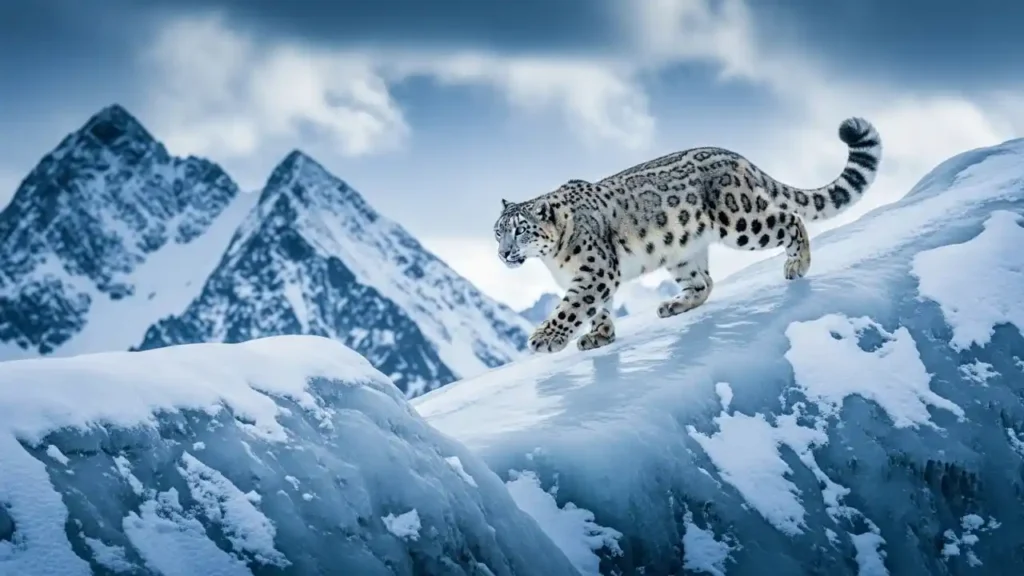
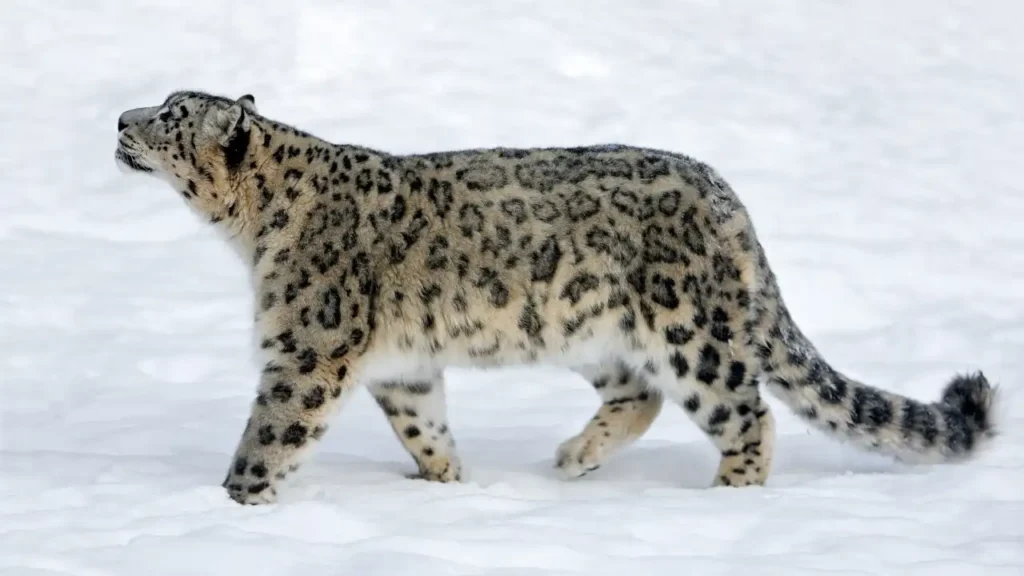
The Mount Everest snow leopard is a top predator in the Himalayas, often called the “ghost of the mountains” due to its elusive nature. Snow leopards inhabit elevations between 9,800 and 18,000 feet and are perfectly suited to rocky, high-altitude terrain.
They have thick, smoky-gray fur with black rosettes for camouflage, and a dense undercoat to insulate against extreme cold. Wide, fur-covered paws act like natural snowshoes for walking on snow, while powerful hind legs allow them to leap up to 50 feet in a single bound. Their long, bushy tails provide balance on steep slopes and can be wrapped around the body for warmth while resting.
Snow leopards are solitary and primarily nocturnal hunters, preying on Himalayan tahr, blue sheep, marmots, and small mammals. Camera traps confirm their presence in the Everest region, though sightings are rare. As apex predators, they are critical to maintaining ecological balance.
Red Panda
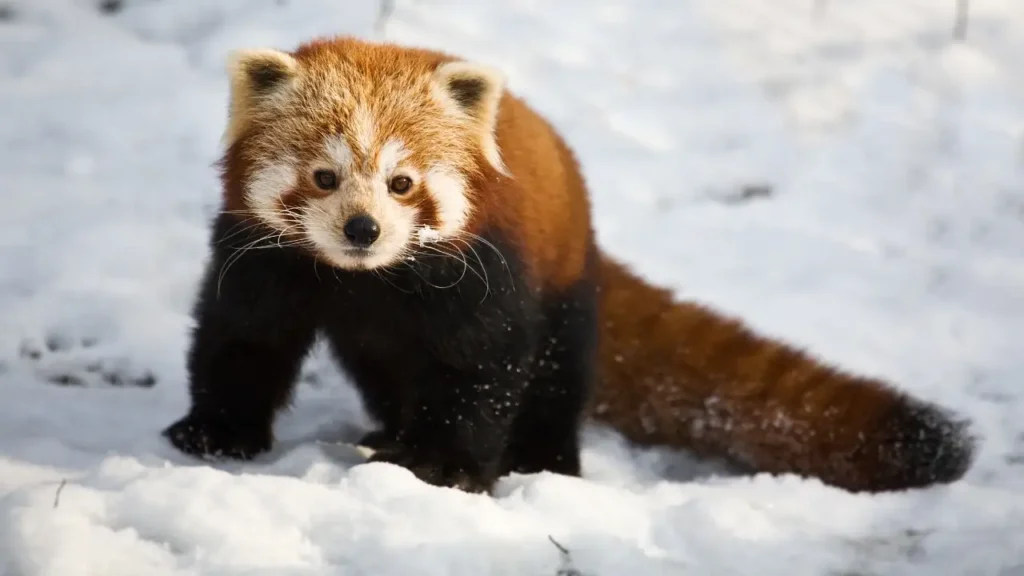
The red panda inhabits lower forested areas between 7,200 and 13,000 feet, where bamboo forests provide food and shelter. They are small, tree-dwelling mammals with reddish-brown fur, a bushy tail, and a masked face. Despite their name, red pandas are more closely related to raccoons than to giant pandas.
Red pandas feed mainly on bamboo but also eat fruits, berries, eggs, and insects. They are shy and mostly nocturnal, making sightings rare. Habitat loss and climate change threaten their survival, so they are protected within Sagarmatha National Park.
Himalayan Tahr
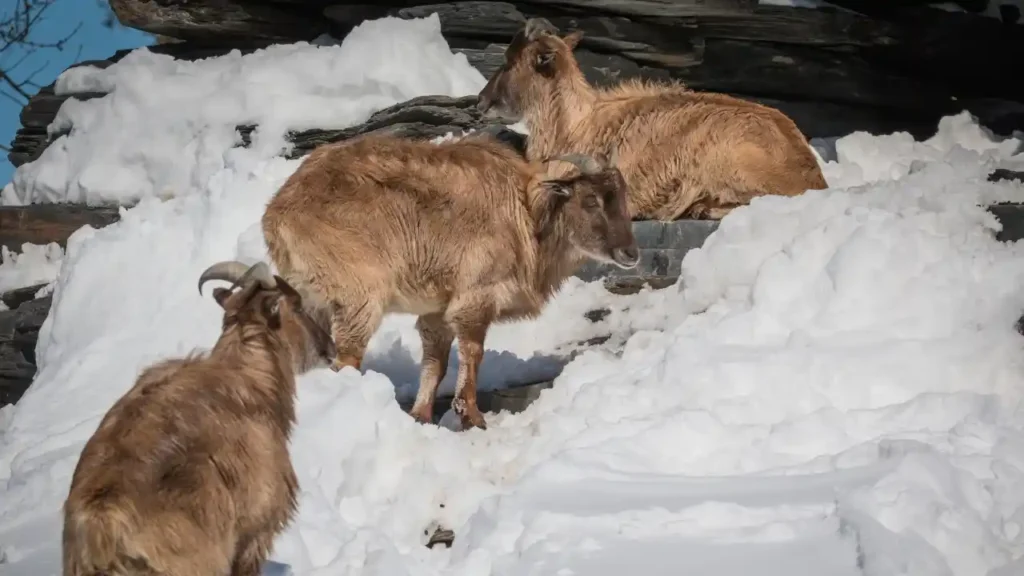
The Himalayan tahr is a large, herbivorous mammal often seen grazing on steep, rocky slopes. Adult males can weigh over 200 pounds and are known for their thick reddish-brown coat and impressive mane, which protects them from cold temperatures.
Tahrs are agile climbers, using strong hooves to navigate rocky ledges. They primarily feed on alpine grasses, shrubs, and herbs. As a major prey species for snow leopards, they play a key role in the Everest wildlife food chain. Trekkers are likely to spot tahrs grazing in herds on open slopes.
Himalayan Musk Deer
The Himalayan musk deer is a small, solitary animal that lives in alpine forests and scrublands. Males possess elongated canine teeth and a musk gland historically hunted for perfumery and traditional medicine, leading to population decline.
Musk deer are highly agile, using strong hind legs to move across steep terrain. They feed on leaves, grasses, mosses, and lichens, helping with seed dispersal and forest health. Their presence indicates a stable ecosystem, and they are legally protected.
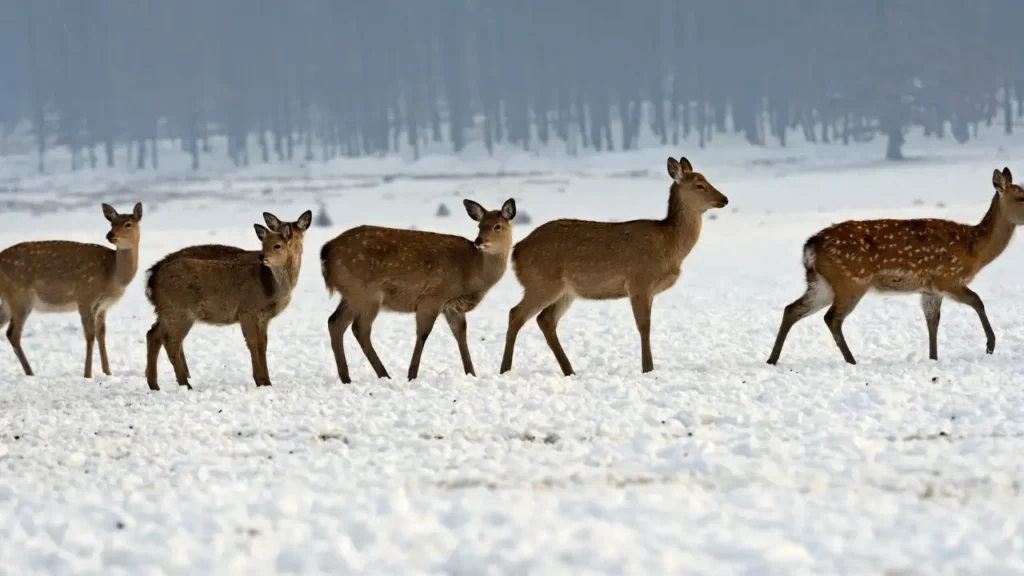
Himalayan Wolf
The Himalayan wolf is a rare subspecies adapted to high altitudes. These wolves inhabit remote, sparsely populated regions of the Everest area. They have thick fur, high lung capacity, and efficient metabolism for survival in low-oxygen conditions.
Himalayan wolves prey on small mammals and occasionally livestock. Sightings are uncommon, but they are important apex predators that regulate prey populations.
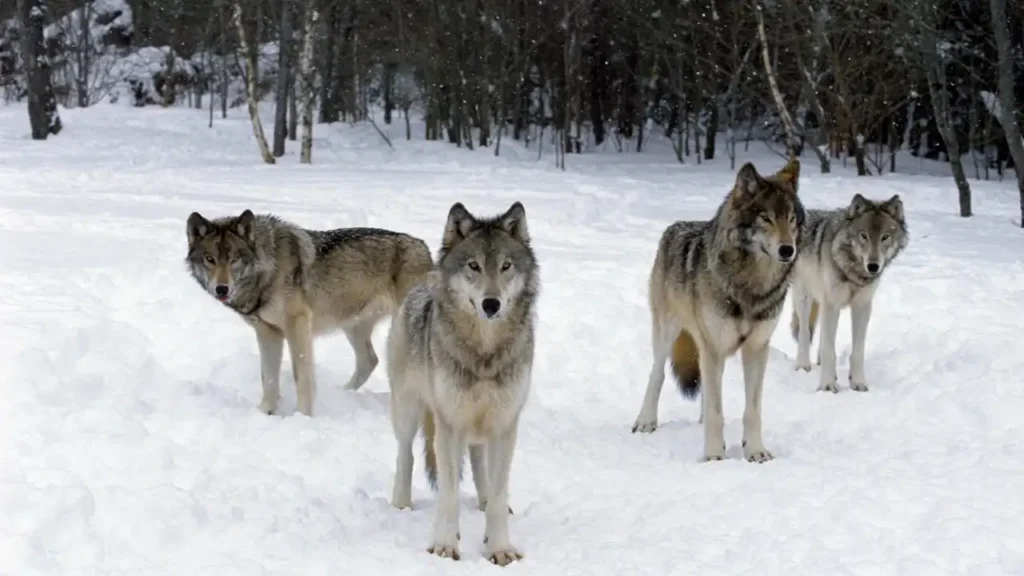
Pika
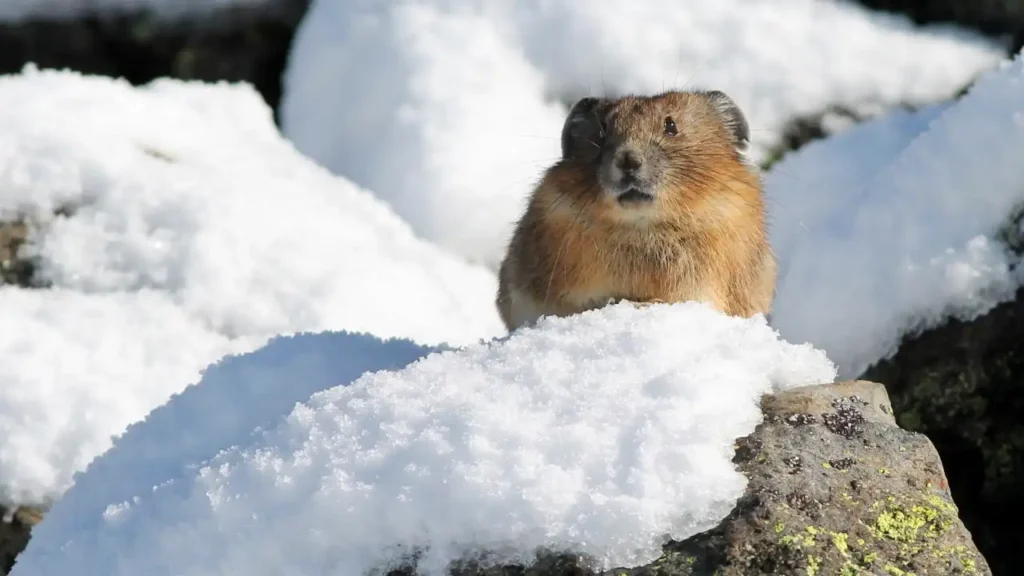
Pikas are small, rabbit-like mammals commonly found in rocky slopes and talus fields. Unlike many alpine mammals, pikas do not hibernate. They survive winter by collecting and storing grasses and plants in haypiles during the summer.
Pikas have high metabolic rates and are highly sensitive to temperature changes, making them indicators of climate change. They contribute to nutrient cycling and help maintain plant community health in Mount Everest wildlife ecosystems. Even small increases in temperature can significantly impact their survival.
Their presence signals a healthy alpine ecosystem, and they play an important role in nutrient cycling and vegetation management in animal life on Mount Everest.
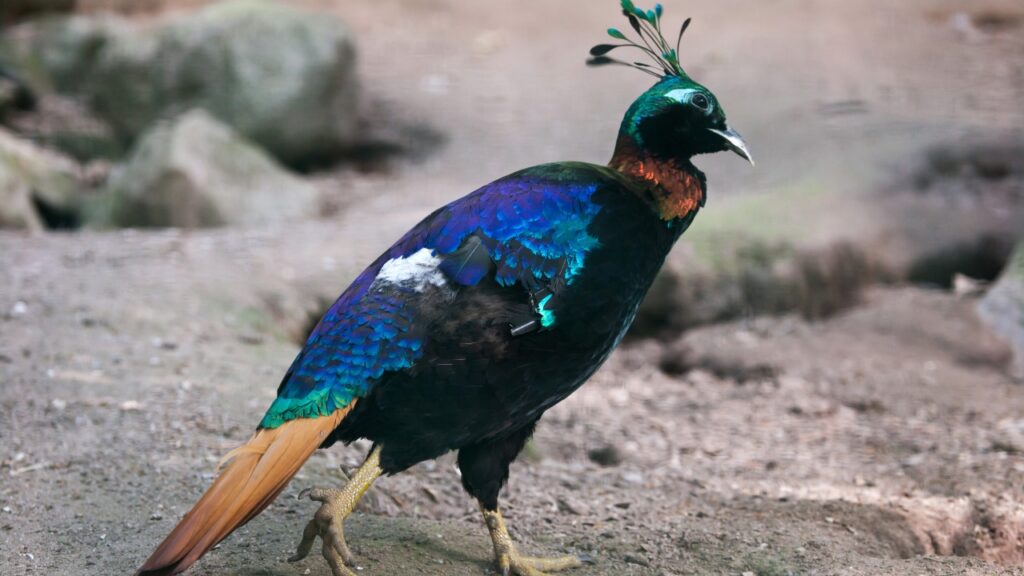
Birds of Mount Everest
Birdlife is surprisingly diverse in the Everest region. Notable species include:
- Himalayan Monal (Nepal’s national bird)
- Snow Pigeon
- Lammergeier (Bearded Vulture)
- Raven
The bar-headed goose, famous for flying over the Himalayas during migration, has been recorded at extreme altitudes, showcasing incredible endurance.
Plants on Mount Everest
Plants on Mount Everest form the foundation of the region’s ecosystem. Vegetation changes dramatically with altitude:
- Lower elevations: Pine, fir, birch, and rhododendron forests
- Mid elevations: Alpine shrubs, grasses, and medicinal herbs
- High elevations: Mosses, lichens, and hardy cushion plants
These plants prevent soil erosion, provide food for herbivores, and support insects and birds. Without plant life, animal life on Mount Everest would not be possible.
Planning a trip to Nepal or Everest Base Camp?
Explore more travel guides, adventure ideas, and nature-focused experiences on BeThere to make your journey unforgettable.
Facts About Animals on Mount Everest
Mount Everest is home to a remarkable array of wildlife, each species uniquely adapted to survive in harsh alpine and subalpine conditions. Here are some detailed facts about animals on Mount Everest:
1. Adaptations to High Altitude:
Animals like snow leopards and Himalayan wolves have larger lungs and higher red blood cell counts to survive thin air, underscoring why proper Altitude Acclimatization for high Trekkers is essential for humans in extreme elevations.
2. Thick Insulating Fur:
Species such as the snow leopard and Himalayan tahr have dense, insulating coats that protect them from subzero temperatures and strong Himalayan winds.
3. Specialized Diets:
Herbivores like the Himalayan tahr and musk deer feed on alpine grasses, shrubs, and mosses, while carnivores like snow leopards prey on these herbivores, maintaining ecological balance.
4. Camouflage and Stealth:
The snow leopard’s fur patterns allow it to blend into rocky terrain, making it an efficient predator while avoiding detection.
5. High-Altitude Birds:
Birds like the bar-headed goose and Himalayan monal are capable of flying at extreme altitudes, with bar-headed geese documented flying over 25,000 feet.
6. Behavioral Adaptations:
Pikas collect and store vegetation in haypiles to survive harsh winters, and red pandas rely on dense bamboo forests for shelter and food.
7. Ecological Importance:
Every animal, from small pikas to apex predators like snow leopards, plays a critical role in maintaining the fragile ecosystem of Mount Everest, ensuring biodiversity and stability.
8. Endangered Species:
Several animals, including the snow leopard, red panda, and Himalayan musk deer, are under threat due to poaching, habitat loss, and climate change, highlighting the importance of conservation.
9. Limited Life at Extreme Elevations:
Above 26,000 feet, few animals can survive; most wildlife is concentrated in lower and mid-elevation zones where oxygen, food, and water are available.
Travel Tips for Wildlife Enthusiasts
Exploring Mount Everest’s wildlife requires careful planning and respect for nature. Here are some detailed travel tips for wildlife enthusiasts:
- Best Season to Visit: Spring (March–May) and fall (September–November) offer clear weather and the best chances to spot wildlife; travelers should also check the best time to trek in Nepal in 2026, as changing climate patterns can affect conditions and animal activity.
- Hire Knowledgeable Guides: Local guides have in-depth knowledge of animal behavior, seasonal movements, and habitats, greatly improving your wildlife experience. Hiring an Expert Mountaineering Guide can significantly improve safety and wildlife awareness.
- Respect Wildlife: Always maintain a safe distance from animals, avoid loud noises, and never attempt to feed or touch them.
- Bring the Right Gear: Binoculars, a camera with a zoom lens, and appropriate clothing for cold and changing weather are essential for both safety and observation.
- Eco-Friendly Practices: Support sustainable trekking companies that follow Leave No Trace principles, respect local communities, and minimize environmental impact.
- Learn About Species: Familiarize yourself with the animals and plants in the region beforehand to enhance your wildlife sightings.
Explore Related Blogs
Conclusion
Mount Everest is far more than a frozen peak. From the elusive snow leopard to high-flying birds and resilient alpine plants, Everest wildlife represents one of Earth’s most remarkable survival stories. Understanding and protecting animal life on Mount Everest is essential as tourism and climate change continue to impact the region.
Learning about the wildlife of Mount Everest offers travelers a deeper, more meaningful connection to this iconic mountain and encourages exploration through guides with BeThere that help travelers connect with the natural world. For more guidance, expert tips, or personalized travel advice, you can Contact Us to connect with specialists who can help plan your adventure safely and responsibly.
Table of Content
Frequently Asked Questions
1. Is there any wildlife on Everest?
Yes, Mount Everest supports a surprisingly diverse range of wildlife, especially at lower and mid elevations where vegetation and oxygen are more available. You can find mammals such as snow leopards, Himalayan tahr, and musk deer, along with birds like Himalayan monals and lammergeiers, as well as small mammals and insects. Even in harsh alpine zones, life has adapted to survive the extreme conditions.
2. What predators live on Mount Everest?
Key predators in the Everest region include the elusive snow leopard, the rare Himalayan wolf, and birds of prey such as lammergeiers (bearded vultures). These predators play a critical role in controlling prey populations, maintaining ecological balance, and shaping the structure of the mountain’s ecosystems.
3. How much does it cost to climb Mount Everest?
Climbing Mount Everest is a significant investment. Costs typically range from $30,000 to $70,000 per person, depending on factors such as climbing permits, hiring experienced guides and sherpas, expedition support, equipment, and insurance. These expenses also cover logistics for acclimatization, food, and emergency contingencies.
4. What is the biggest danger on Mount Everest?
The biggest dangers include altitude sickness due to thin air, avalanches, extreme cold and unpredictable weather, and falling ice or rock. Each of these hazards can be life-threatening, which is why proper acclimatization, expert guidance, and safety planning are critical for anyone attempting the climb.
5. Are there snakes on Everest?
No, snakes cannot survive the extreme cold, low oxygen, and high altitudes of the Everest region. Reptiles are largely absent from the higher slopes, with wildlife mostly consisting of mammals, birds, and hardy insects.
6. How long does it take to climb Everest?
A full expedition usually takes around two months. This includes time for acclimatization, establishing base and higher camps, weather windows for safe summit attempts, and descent. Rapid climbs without proper acclimatization significantly increase the risk of altitude sickness and other dangers.
7. When is the best time of year to visit Everest Base Camp?
The best times are spring (March–May) and fall (September–November). During these periods, the weather is relatively stable, the skies are clearer, and the chances of spotting wildlife are higher. Winter is extremely cold, and summer monsoons bring heavy snow and rain, making trekking risky.
8. Is there an age limit for Everest?
Nepal requires climbers to be at least 16 years old to obtain a climbing permit. While there is no strict upper age limit, climbers should be in excellent physical condition and have prior high-altitude experience. Older climbers often face additional challenges related to stamina and recovery.
9. How much oxygen do you need on Everest?
Most climbers use supplemental oxygen above 26,000 feet to reduce the risks of altitude sickness and improve performance. Typically, climbers consume 3–4 bottles of oxygen per summit attempt, but the exact amount depends on individual acclimatization, pace, and weather conditions.
10. How hard is it to climb Mount Everest?
Climbing Everest is extremely challenging and requires peak physical fitness, prior mountaineering experience, and strong mental resilience. Climbers face unpredictable weather, difficult terrain, and the physical demands of extreme altitude. Proper preparation, training, and adherence to safety protocols are essential for a successful ascent.

Need help choosing a trail?
Connect with a local and plan your perfect trek.